Categories
news

AEL Partner Scott R. Landau Recognized by “Best Lawyers in America”

AEL celebrates the announcement that Scott R. Landau was named to the The Best Lawyers in America 2022 list. Scott R. Landau was ranked as a “Best Lawyer” for Health Care Law. This most recent accolade continues a string of recognition for AEL’s elite boutique healthcare practice. Earlier this year, AEL was ranked by Chambers USA as a leading U.S. Healthcare law firm for 2021. Congratulations to Scott on this great recognition!

Categories
news

AEL Ranked as Top Healthcare Firm by Chambers USA

On May 20, 2021, Chambers USA, a world-renowned guide to the legal profession, announced its selection of AEL as a leading U.S. Healthcare law firm for 2021. According to Chambers, AEL is a “well-regarded healthcare boutique” that is “able to practice at the intersection of healthcare and white collar defense;” sources describe AEL as “very attentive and able to get down to the salient facts quickly.”

Chambers also recognized AEL partner Scott R. Landau  as a “ranked lawyer” in Healthcare and describes him as “an extraordinarily insightful litigator” and “an incredibly knowledgeable and excellent healthcare lawyer.”  Scott is the practice leader for AEL’s Healthcare Regulatory & Compliance Counseling, Data Privacy & Security, and Complex Commercial Litigation & Disputes practice areas.

Each year, Chambers acknowledges firms and specific attorneys following a rigorous review and vetting process that entails extensive interviews with lawyers and their clients. Assessments are based on qualities such as technical legal ability, professional conduct, client service, diligence, and commitment. To read more about Chambers and AEL’s firm and individual rankings, please visit https://chambers.com/department/abell-eskew-landau-healthcare-usa-5:62:12806:1:23254203

Categories
news

AEL Negotiates Misdemeanor Plea for Indicted Doctor; Government Agrees to Dismiss Healthcare Fraud Charges; Court Reinstates Doctor’s Billing Privileges

AEL once again navigated a doctor client out of a federal indicted healthcare fraud case, this time in the Eastern District of New York (EDNY). A pain management doctor with practice locations in Manhattan and Queens pled guilty on Thursday, May 6, 2021, to a misdemeanor superseding information charging him with receiving, without knowledge or intent to defraud, a misbranded drug from a foreign source in violation of 21 U.S.C. §§ 331(c) and 333(a)(1). In the plea agreement, the Government agreed to dismiss at the time of sentencing an indictment charging the doctor with a multimillion dollar healthcare fraud scheme. The misdemeanor plea resolves all of the conduct charged in the previously-filed criminal complaint, indictment and superseding information. As part of the plea, the Government agreed and the Court order that the bail condition prohibiting the doctor from billing Medicare and Medicaid be lifted, a restriction that had been in place since the outset of the case.

This incredible resolution for the client comes after intensive negotiations and multiple presentations by AEL to the EDNY U.S. Attorney’s Office in the weeks leading up to trial regarding exculpatory evidence that had been uncovered by AEL attorneys in the course of their internal investigation. The exculpatory evidence, of which the Government had previously been unaware, exonerated the defendant of the primary allegations in the indictment.  

This is the second time in the past three months that AEL has fought back charges in a federal indicted case on behalf of doctor clients. In March 2021, AEL announced that it had successfully negotiated a global resolution of a parallel criminal and civil cases pending in the Southern District of New York (SDNY) against a Manhattan-based vascular surgeon, which charges sprung from a qui tam complaint filed against the doctor. In that case, the Government agreed to a civil-only resolution, resolving its criminal indictment with a deferred prosecution agreement (DPA).

AEL is a premier litigation boutique that specializes in parallel criminal and civil healthcare cases on behalf of individuals and institutional clients in the SDNY, EDNY and DNJ. AEL Partners Kenneth M. Abell and David M. Eskew, both former federal prosecutors and healthcare Chiefs, handled the case.

Categories
news

AEL Steers Parallel Healthcare Fraud Case to Civil-Only Resolution; Obtains DPA in Indicted Case

Abell Eskew Landau LLP (AEL) successfully negotiated the resolution of parallel criminal and civil cases pending in the Southern District of New York (SDNY) against Dr. Feng Qin, a Manhattan-based vascular surgeon. Dr. Qin was previously indicted on healthcare fraud charges over two years ago and had been sued in a parallel civil qui tam action based upon the same alleged conduct. After years under the cloud of federal investigation and two pending cases, the cases finally concluded yesterday with a remarkable result for Dr. Qin. The SDNY United States Attorney’s Office (USAO) agreed to resolve the criminal indictment with a deferred prosecution agreement (DPA). So long as Dr. Qin abides by the terms of the DPA over the next year, the SDNY USAO agreed to dismiss its indictment against Dr. Qin and agreed that no further prosecution would be instituted in the SDNY related to the conduct alleged in the indictment. Separately, Dr. Qin agreed to resolve the civil complaint against him by paying a monetary amount of $783,200, spread out over the course of several years, and by agreeing to a period of Medicare exclusion.

The DPA and civil settlement follow more than a year of intensive negotiations between AEL and the SDNY USAO, which included presentation to the SDNY of several mitigating pieces of evidence on Dr. Qin’s behalf that AEL uncovered as part of its own investigation. As the DPA expressly recognizes, “after a thorough investigation it has been determined that the interest of the United States and [Dr. Qin’s] own interest will best be served by deferring prosecution in this District.” On the civil side, AEL also advocated for a financial inability to pay analysis, which resulted in the substantial reduction of the civil penalty to be paid by Dr. Qin and a lengthy payment plan.

Dr. Qin is a hard-working Chinese immigrant who put himself through medical school in China and again in the United States. Over the years, he built a thriving medical practice that treated largely underserved and needy immigrant communities in Manhattan and Queens. The parallel investigations took a deep emotional and financial toll on Dr. Qin and his family, and he is relieved that the cases have now been finally resolved without the stigma of a criminal conviction and with a potential path, after paying his civil settlement and serving his exclusion period, to resuming his medical practice in the future.  

This case once again highlights AEL’s expertise in navigating complex parallel investigations and litigating healthcare fraud cases and matter arising under the federal and state False Claims Act (FCA). The defense case was led by AEL Partners Kenneth M. Abell and David M. Eskew. You can read more about AEL’s Government Investigations and Enforcement Practice Area, White Collar Criminal Defense Practice Area, and FCA and Whistleblower Litigation Practice Area through the links.

Categories
news

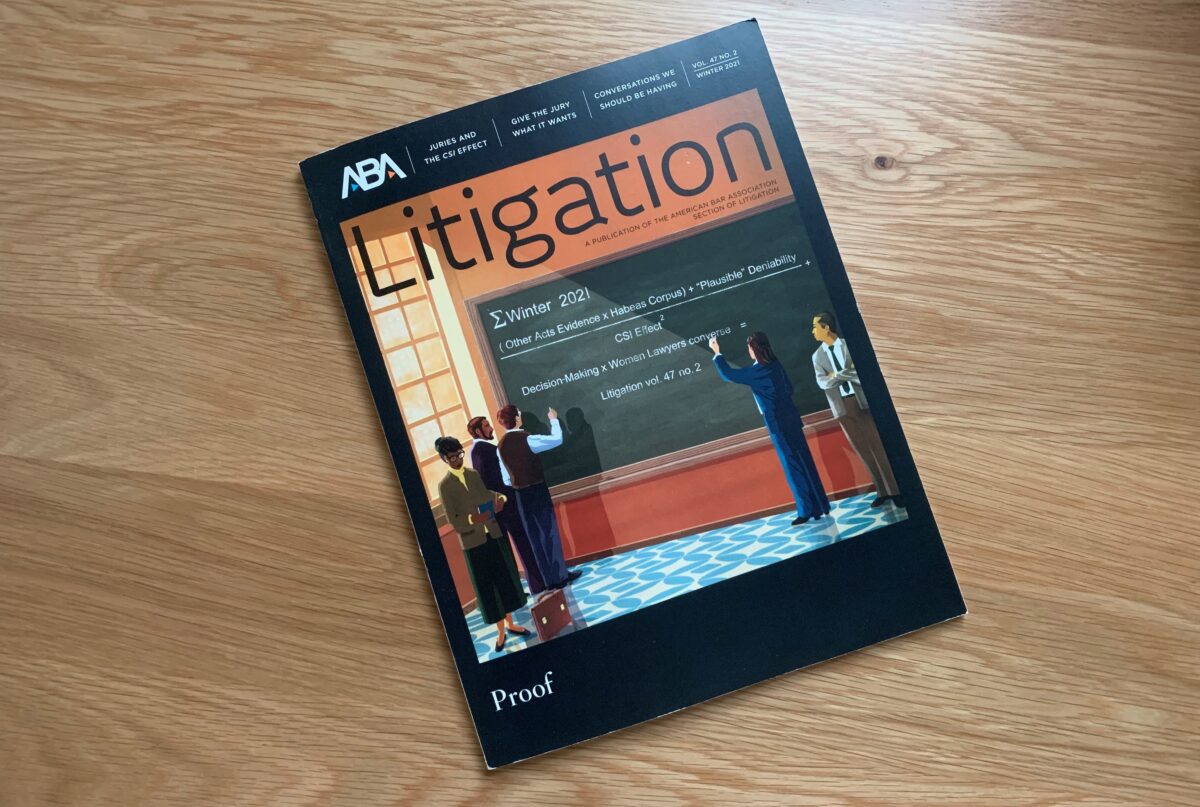
ABA Litigation Journal Publishes Article “Propensity – Persuasion and Prejudice,” Co-Authored by AEL Partner David M. Eskew, in Winter Edition

AEL partner David M. Eskew co-authored an article with colleague Paul Murphy, a partner at Teitler & Teitler, entitled “Propensity – Persuasion and Prejudice: A Look at “Other Acts” Evidence and What the Defense Can Do About It.” The article was originally published in the American Bar Association’s Litigation Journal, Vol. 47, No. 2 (Winter 2021). The article focuses on the practical challenges presented by the admission of propensity evidence in state and federal criminal cases and offers analysis of real-life cases in which such evidence had a featured role. In the article, David and Paul offer practical tips on defending against the dreaded propensity evidence. The article can be read through the link below, in its entirety on our blog, or in the latest edition of the ABA Litigation Journal.

Categories
blog

Propensity – Persuasion and Prejudice: A Look at “Other Acts” Evidence

The following article was originally published in the American Bar Association’s Litigation Journal, Vol. 47 No. 2 (Winter 2021) and was co-authored by AEL partner David M. Eskew and Teitler & Teitler partner Paul Murphy. You can read the article in its full form through the link here, in the post below, or by subscribing to the ABA Litigation Journal.

“He did it before, do you really think he didn’t do it this time?”

This is the stuff of a defense lawyer’s nightmares. Lawyers lose sleep over the notion that, despite all their hard work defending the specific charges in a case, their client’s prior sins will nevertheless be admitted into evidence and take on outsize importance in shaping the jury’s impressions of the client. And for good reason. Evidence of a person’s propensity to act in a certain way can be utterly devastating. Jurors may focus unduly on the prior acts of misconduct to the exclusion of the government’s heavy burden of proof, and they may be more willing to accept other evidence offered against the defendant because it makes more sense, given that, in their minds, the defendant is a bad actor. The converse is often a motivating factor behind the tactic of many white-collar defendants who have otherwise been pillars of the community to parade character witnesses before the jury in fraud cases to testify about the defendant’s reputation for honesty. These witnesses, by design, are selected because they know the defendant as a person and are completely ignorant of the facts of the case. The defense is of course hoping that the jury will conclude that the defendant is trusted by other upstanding members of his or her community so they will be inclined to discredit certain evidence offered against the defendant or to credit certain defenses.

In a slightly different use of propensity evidence, defendants often use what is referred to variously as reverse 404(b) evidence or reverse “other acts” evidence in an effort to lay the blame for the crime they are charged with committing at the doorstep of a third party. They hope that by showing evidence that the third party has committed criminal conduct in the past that is similar to what the defendant is charged with, the jury will have a reasonable doubt as to the culpability of the defendant. The potential for the jury to draw these types of inferences from “other acts” evidence is real. After all, it is human nature to think that we all act consistently with our character traits. Not only does the average person feel these sentiments in their gut, but the concept that an individual may be inclined to act   in accordance with his or her “bad” or “good” character traits is embedded in some of the most consequential areas of criminal law. In the federal system, for instance, a defendant’s prior criminal history is part of a complex calculation used to determine a defendant’s sentencing guidelines range. More generally, federal district courts are obligated to consider a defendant’s “history and characteristics” when fashioning an appropriate sentence. Prosecutors will lean on prior criminal offenses not only in connection with the technical calculation of a defendant’s criminal history score but also as evidence that a greater sentence is needed to promote respect for the law, protect society from further crimes of the defendant, and deter the defendant from future crimes. It would be fundamentally unfair to permit prior criminal acts, both as evidence of a defendant’s general character and as a predictor of future conduct, to increase jail time if there were not some correlation between prior bad acts and future conduct. Defense attorneys attempt to paint a wholly different picture of a defendant by submitting character reference letters designed to persuade the court that a defendant’s crimes of conviction were an aberration not likely to be repeated in the future. In short, propensity is relevant.

But “propensity” is a dirty word when it comes to trial practice. Rule 404(b) of the Federal Rules of Evidence states that “evidence of a crime, wrong, or other act is not admissible to prove a person’s character in order to show that on a particular occasion the person acted in accordance with the character.” Many states have similar rules. These rules apply equally in criminal cases and in civil cases, although the balancing of the probative value against the potential for unfair prejudice may vary between criminal cases and civil ones, especially civil cases that end up in bench trials. One constant, though, is that the rules make it improper to introduce evidence of a defendant’s other bad acts solely to show the defendant’s propensity. Countless court cases and scholars agree on this point, and it is not open for serious debate. Evidence of other bad acts of a defendant may not be used for the sole purpose of showing that a defendant did it before, so he must have done it again. The devil, of course, is in the details, and the real question is whether we practice what we preach. What’s said to be kept out of evidence with a padlock on the front door is regularly let in through the back door. We would be fooling ourselves if we really thought that propensity evidence was not regularly part of trial practice. It is.

This is not to say that prosecutors are acting with unchecked abandon, defying the rules of evidence and asking juries to con- vict purely on the grounds of a defendant’s propensity to be a bad guy. Nor are trial judges necessarily asleep at the switch in permitting such evidence to be admitted in trials. To the contrary, such evidence is expressly permitted by the rules of evidence in appropriate circumstances. Evidence of prior bad acts that is also intrinsic to a charged crime makes a fact that is material to the outcome more likely and therefore is directly relevant to proving the offenses charged. As such, it is generally admissible unless the defense can convince the trial judge that its probative value is substantially outweighed by the danger of unfair prejudice, confusion, or waste of time. Even where it is not intrinsic to the crimes charged, “other acts” evidence is admissible if it satisfies one of the delineated exceptions in Rule 404(b), which expressly permits the admission of “other acts” evidence if such evidence is “admissible for

another purpose,” including “motive, opportunity, intent, prepa- ration, plan, knowledge, identity, absence of mistake, or lack of accident.” These exceptions are expansive. Indeed, commentators have taken the view that the exceptions to the general rule against propensity evidence long ago swallowed the rule. Concepts such as motive, intent, plan, knowledge, and identity are in play in many criminal cases. In cases requiring proof of specific intent, like willfulness, “absence of mistake” and “lack of accident” are often critical parts of the government’s proof.

In determining the admissibility of “other acts” evidence, a federal court employs a well-accepted four-part test: First, the evidence must have a proper evidentiary purpose; second, the evidence must be relevant; third, the evidence must not be more prejudicial than probative; and, fourth, the evidence must be accompanied by a limiting instruction if requested. Despite the safeguards built into the rules of evidence to try to avoid the prejudice that naturally flows from propensity evidence, one would be well within his or her rights to question whether evidence admitted for a proper, non-propensity purpose is nevertheless grounded in what we regularly think of as “propensity.” Regardless of the label affixed to it or the purpose for which it is legitimately offered, the fact is that all such evidence is relevant because it raises inferences that are based on a defendant’s propensity to act in a certain way. There is no way to completely avoid it. If, for instance, “other acts” evidence is offered to show that, on a prior occasion a defendant used a similar method to knowingly defraud someone, in order to show that on the occasions charged the defendant knew he was committing  a fraud and was not acting in good faith, isn’t that just another way of asking the jury to conclude that he did it before and he must have known it was wrong this time?

“Other Acts” Evidence Has Become Routine in Criminal Trials

How has “other acts” evidence become such a routine part of criminal trials? The answer is multifaceted. First, evidence of other bad acts is often cast as direct or intrinsic evidence. Prosecutorial charging decisions can shape what counts as relevant evidence. Charging a case as a conspiracy or crime premised on a scheme or pattern, for instance, may allow prosecutors to offer into evidence other acts of misconduct by a defendant that would otherwise have been thought of as propensity evidence because such evidence becomes inextricably intertwined with the charged offenses. In this way, uncharged acts of securities fraud or health care fraud, when characterized as part of an overarching charged scheme or conspiracy, are generally admissible to prove the scheme or conspiracy. Likewise, “other acts” evidence may be admitted to complete the story of the charged crime without being subject to the scrutiny of Rule 404(b). Even if the

evidence is not intrinsic to the charged offenses or necessary to complete the story, a defendant’s other acts are often admitted to show knowledge, motive, a particular modus operandi, or to blunt a defense—especially where a defendant claims that what she did was simply a mistake, an aberration, or otherwise done without criminal intent. Casting prior bad acts evidence as rel- evant to prove knowledge or intent—an element in nearly every criminal offense—brings such evidence into play in almost every conceivable case.

In federal courts, “other acts” evidence regularly becomes an issue in white-collar fraud prosecutions due to the heightened mental state required to prove such crimes beyond a reasonable doubt. Securities fraud, health care fraud, and other federal fraud offenses generally are specific-intent crimes requiring a showing of knowing and willful acts done with an intent to defraud. Conduct is not willful or committed with fraudulent intent if the defendant “acted through negligence, mistake, accident, or due to a good faith misunderstanding of the requirements of the law.” Such crimes are particularly susceptible to defenses of good faith, honest mistake, and lack of fraudulent intent.

This is regularly on display in the corporate fraud context. Senior executives of successful multinational corporations, who in the normal course are prone to hold themselves out as masters of the universe, regularly present defenses in criminal securities fraud prosecutions that are based on the notion that they were unable to fully grasp pertinent concepts of finance, accounting, and law. Instead, they contend that they relied in good faith on professionals such as accountants, finance executives, and lawyers to assure them that what the corporation did was legal. The defense is often some combination of lack of knowledge of the operative facts and a good-faith belief that the corporation was not, in fact, cheating.

These types of defenses were prominent in the wave of ac- counting fraud scandals that followed the implosion of Enron. Executives began pleading ignorance of the fraudulent aspects of various earnings management practices. Roundtrip transactions where no risk was transferred and other accounting gimmicks used to prop up quarterly earnings and financial statements were said to have been blessed by armies of high-paid accountants and lawyers. These defenses can be difficult to penetrate be- cause corporate chieftains often insulate themselves from the dirty work that happens in their organizations. The government chips away at the defenses in a variety of ways. One is through evidence of other acts of misconduct tending to show that the executives knew they were cheating and were inclined either to break the rules or turn a blind eye to obvious problems. Indeed, the government sought to introduce 404(b) evidence against Enron chairman and chief executive officer Kenneth Lay relating to his knowledge of a prior fraud scheme involving deceptive trading at an Enron subsidiary over a decade earlier to show his knowledge, intent, absence of mistake, motive, and modus operandi concerning the securities and other fraud charges that led to the downfall of Enron. It is worth noting that corporate fraud defendants have had at least some success in keeping “other acts” evidence out of trials by convincing the trial court that the evidence would be marginally relevant and unduly prejudicial and would risk diverting the jury’s attention from the central issues by creating a trial within a trial.

Criminal Tax Fraud Cases

Nowhere is the government’s burden higher than in criminal tax fraud cases, which the Supreme Court has held require the government to prove beyond a reasonable doubt that the defendant knew he was breaking the law. The Court held that even a mistaken and inherently unreasonable belief that the law did not require taxes to be paid on income would be a defense if the jury found that the defendant in good faith believed it to be the state of the law. Cheek v. United States, 498 U.S. 192, 203 (1991). Given the government’s high burden, tax cases regularly involve what would otherwise be considered “other acts” evidence. Imagine a case in which the defendant is charged with tax fraud for filing false tax returns for the calendar years 2018 and 2019. The government must not only prove that the defendant acted knowingly in 2018 and 2019, those tax years charged directly in the indictment, but must also be prepared to blunt the defense that the defendant was negligent, sloppy, unwitting, disorganized, or just plain ignorant. As a result, the government can be expected to mine the defendant’s prior tax filings to find some evidence that the defendant was aware of some requirement not met in the charged tax years. Perhaps the defendant previously recognized some revenue in connection with a Schedule C business that she did not in the charged tax years or did not take a deduction or credit that is now claimed in the charged tax years. In this scenario, the government will likely argue that the prior tax returns are intrinsic evidence—not 404(b) evidence  at all—necessary to prove that the taxpayer defendant had the requisite knowledge and understanding of the tax laws to satisfy its burden of proving willfulness. More to the point, if the prior tax returns show a similar pattern as the charged tax years, the government will seek to introduce the tax returns from prior years as evidence that the defendant acted knowingly and willfully with respect to the years charged.

Sexual Assault Cases

More recent developments in the area of “other acts” evidence demonstrate that society is especially unwilling to allow defendants with prior histories of particularly heinous acts to cloak themselves in defenses of mistake and the like. Sexual assault cases have been found to warrant this type of special consideration. In federal sex crime cases, the rules clearly favor the admissibility of “other acts” evidence. Specifically, Federal Rules of Evidence 413 and 414 expressly permit the introduction of evidence of prior bad sex acts in sexual assault cases. States have recently demonstrated a willingness to entertain more of this type of “other acts” evidence in cases involving sexual assault, applying their existing rules in a seemingly broader way to permit such evidence.

Recent high-profile trials arising out of the #MeToo movement relied heavily on evidence of other acts of sexual assault. These cases illustrate the manner in which other bad acts evidence may be introduced at trial and the devastating effect of such evidence in sexual assault cases.

Harvey Weinstein, for instance, was charged with rape and sexual assault against two victims. The indictment also included a count charging him with being a sexual predator, making the testimony of a third victim directly relevant to prove the predatory aspect of the charge, an element of the offense that the prosecution was required to prove beyond a reasonable doubt. The prosecution also sought to offer the testimony of three additional witnesses to testify about their allegations that Weinstein sexually assaulted them. This testimony did not result in charged offenses but clearly fell into the category of “other acts” evidence of the defendant. After a pretrial hearing that was closed to the public, the trial court permitted the government to call these additional witnesses.

In New York, where Weinstein was tried, such witnesses are known as Molineux witnesses after the seminal 1901 New York Court of Appeals case that spawned much of the law nationwide concerning “other acts” evidence. In the Molineux case, the court reversed the conviction of a doctor charged with the very 19th-century crime of murder by poisoning because the trial court had permitted testimony about another similar incident. The importance of such evidence to a conviction is illustrated by that very case. The defendant there was convicted at his first trial when the trial court allowed evidence of a prior effort by him to commit another murder using the same pattern. Reporting indicates that, after the conviction was reversed, the defendant was tried a second time without the prior acts evidence, and the jury acquitted.

In Harvey Weinstein’s trial, the “other acts” evidence was likely of a similar value to the prosecution. Public reporting about the Molineux witnesses there indicated that they offered highly damaging testimony against the defendant. His counsel has said publicly that they intend to make the introduction of these three additional witnesses a central focus of their appeal.

While the nature of our system is such that we rarely learn why the jury chose to do what it did, one interesting aspect of the Weinstein trial is that the jury acquitted him of the count of being a sexual predator, where it would have had to accept the testimony of the third sexual assault victim beyond a reasonable doubt because her testimony was effectively an element of a count of the indictment. But the jury did not necessarily have to apply the same standard of proof to its evaluation of the Molineux witnesses’ accounts in order to use their testimony to support the conclusion that Weinstein was guilty. This is so because a defendant’s involvement in other bad acts generally need not be established beyond a reasonable doubt for a jury to consider it. In the federal system, the Supreme Court has held that, to admit the “other acts” evidence, the district court need find only that the trier of fact could conclude that the evidence demonstrates by a preponderance that the other acts occurred and that the defendant participated in them. See Huddleston v. United States, 485 U.S. 681, 685 (1988).

The value of such propensity evidence was also on full display in the case against Bill Cosby. Cosby’s first trial ended in a hung jury after the trial court permitted only one “prior act” witness to testify about another uncharged instance of sexual assault by the defendant. At the retrial, the court permitted the prosecution to call five other victims who testified about similar, uncharged conduct by the defendant. This evidence was offered to show that Cosby engaged in a common plan, scheme, or design—essentially, that Cosby had engaged in a particular modus operandi when committing the offense charged—and that their testimony demonstrated that his conduct was not the product of a mistaken belief that the sex was consensual. With this additional evidence reflecting other criminal acts, the jury convicted on the retrial. And the intermediate appellate court in Pennsylvania recently upheld the conviction against a challenge based in large measure on the introduction of this “other acts” evidence. Propensity evidence can raise its head in less traditional, but equally damaging ways. Prosecutors can capture other acts of the defendant by simply charging other bad acts in separate counts of the indictment, even if only loosely related to the top counts.

Doing so places additional pressure on the defendant and nearly ensures that damaging and possibly highly prejudicial evidence against the defendant will be admissible at trial.

“Joe Exotic” and Propensity Evidence

The manner in which other seemingly unrelated acts can be charged in a single indictment can be observed in the trial of Joseph Maldonado-Passage, also known as “Joe Exotic,” the so-called “Tiger King” from the wildly popular Netflix documentary of the same name. Federal prosecutors initially charged Maldonado-Passage with two counts of using an interstate facility to commit murder for hire in connection with his alleged efforts to murder a conservationist who had for years dogged Maldonado-Passage’s operation of a “roadside zoo” in Oklahoma. A few months after his initial indictment and in advance of trial, the government added 19 additional counts, all related to Maldonado-Passage’s alleged mistreatment of exotic animals at his zoo. The wildlife counts were supported by gruesome evidence, including tiger skulls excavated from the zoo’s property that belonged to big cats Maldonado-Passage was said to have euthanized and buried.

Though loosely related to the top count, the additional counts ensured that the government would be able to introduce extensive and detailed evidence regarding Maldonado-Passage’s mistreatment, breeding, and sale of numerous exotic cats. Though of lesser severity than the murder-for-hire plot (certain of the counts under the Endangered Species Act were misdemeanors), the animal mistreatment counts were, no doubt, supported by much stronger evidence than the murder-for-hire plot and were highly prejudicial. As noted by a journalist covering the trial, “[i]n the news, we talk about shootings and killings every day. But people will protest and they will not tolerate animal abuse. It was almost strategic to bring all of these charges at the same time.”

Arguing against the admissibility of such evidence is a tall task that is most often unsuccessful. Defense attorneys are limited to arguing that the introduction of certain “intrinsic” evidence or the joinder of certain counts is merely pretextual and that the government is attempting to shoehorn propensity and otherwise inadmissible “bad character” evidence into its case in chief. For example, in the “Tiger King” trial, defense attorneys argued that the murder-for-hire counts should be severed from the so-called wildlife counts. In their motion, defense attorneys contended that the evidence in support of the wildlife counts “would not be admissible in the government’s case in chief in the trial of the murder for hire charges” and that “[s]uch evidence will ir- reparably prejudice the jury beyond any curative effect of a jury instruction.” The defense went on to argue that “[t]he prejudicial effect of evidence relating to alleged slaughter of beloved ani- mals in a trial for a murder for hire plot is clear and substantial, particularly when Mr. Maldonado-Passage’s public identity is well known as an operator of an exotic zoo.”

But the rules regarding the joinder of counts and relevance generally are permissive, and relief is rarely granted. In the “Tiger King” case, defense counsel’s motion played out in a familiar unsuccessful pattern. The government opposed the motion, arguing that the murder-for-hire counts and the wildlife counts were part of a common scheme and plan, all of which were related to Maldonado-Passage’s long-standing feud with the conservationist victim, including her efforts to collect on civil judgments she had obtained against him, and the defendant’s efforts to profit from his roadside zoo that featured and bred big cats. By tying the more severe murder-for-hire counts with Maldonado-Passage’s businesses, finances, and long-standing feud with conservationist groups, the government was easily able to articulate a basis for charging all of the conduct together in a single indictment. The court agreed that the counts were interconnected and properly joined and denied the defendant’s pretrial motion.

The government also used “other acts” evidence during the “Tiger King” trial. In that case, the government introduced testimony about prior conversations Maldonado-Passage had with others regarding the victim’s assassination, along with a litany of social media posts and videos that Maldonado-Passage had made about his would-be conservationist victim. In the posts, Maldonado-Passage was alleged to have used direct and graphic language, repeatedly referring to her murder, including bizarre and grisly methods such as venomous snakes and decapitation. As the prosecutor noted in the documentary, “[i]t was part of the government’s evidence that we showed the jury a variety of the social media postings that Mr. Passage had made that referenced [the victim] in a violent way—having her killed, or wishing her dead.” The justification for the admission of such evidence was that the evidence showed the defendant’s motive, intent, and plan related to the charged murder-for-hire plot.

As can be seen from the examples above, the “proper purposes” for the admission of “other acts” evidence are numerous and the standards of relevance are broad. For that reason, there are many avenues for the admission of such evidence, and the standard for admission is often easily satisfied. While courts do what they can to police the use of this type of evidence, the reality is that once “other acts” evidence comes in—even for a stated non-propensity purpose—there is no controlling how a jury will view it. Limiting instructions are likely only to confuse the jury and cause them to fall back on what comes naturally to them—if the defendant did it before, he’s more likely to have done it again. Courts, including the Supreme Court, and commentators have long questioned the effectiveness of limiting instructions in situations where compliance with such an instruction would require a particularly difficult form of “mental gymnastics.” It could be argued that it is simply too much to ask human beings to put aside everything they have used over the course of their lives to evaluate people—namely, judging them by what they have done in the past. This is especially evident when jury instructions also separately advise juries to use their common sense when judging, among other things, the weight of the evidence. People view others as liars because they have lied in the past. Others are considered cheats because they have cheated in the past. We ask jurors to bring their common sense and life experience to the courtroom to judge the facts of a case, but when it comes to propensity evidence, we ask them to do exactly the opposite. Put aside your life experience and your tried-and-true methods of judging circumstances and people, and limit how you think about the fact that the defendant com- mitted the very crime he is charged with on a prior occasion. Do we really think that everyday people can put these issues aside?

What the Defense Can Do

What is a defense lawyer to do? Given the potential prejudice inherent in this type of evidence, defense counsel must make every effort to persuade a trial judge that the evidence is not properly admissible. Step one of course is a challenge to the proper purposes the government seeks to offer it for and to take aim at the relevance of the evidence. Courts do often reject government bids to offer “other acts” evidence on the threshold ground that it does not actually satisfy one of the exceptions in Rule 404(b) or that it is simply not relevant to the issues charged in the case. Failing that, the best argument defense counsel can deploy is that the “other acts” evidence will be unfairly prejudicial.

In the federal system, Rule 403 is the rule that gives a trial judge wide discretion to preclude otherwise relevant evidence onthe grounds of “unfair prejudice, confusing the issues, mislead- ing the jury, undue delay, wasting time, or needlessly presenting cumulative evidence.” Defense lawyers must hammer away at the unfairness of the prejudice. Facts such as remoteness in time, infrequency of conduct, a lack of similarity between the “other acts” and the charged conduct, intervening conduct or events, and the need for extensive additional testimony or evidence—the so-called “trial within a trial”—are all powerful arguments that the other acts sought to be admitted are more prejudicial than probative and are likely simply to confuse the issues and the jury. Indeed, it is often the case that the prosecution’s proof of the defendant’s involvement in the other bad acts is somewhat diffuse or the proofs of the other acts thin. But it is not enough to argue that evidence is prejudicial. It must be “unfairly” prejudicial. In other words, counsel must make the case that the “other acts” evidence would cause the jury to base its decision on something other than the evidence in the case. For this point, counsel can argue that the evidence would confuse, distract, or incite the passions of the jury to such an extent as to taint their consideration of the core issues in the case. In sum, defense counsel needs to be constantly vigilant to try to keep out “other acts” evidence. This should be done through carefully crafted pretrial motions and a clear trial plan that avoids opening any doors to such evidence. Some “other acts” evidence may be truly harmless and weak by nature, so the worry that the jury will do anything with it is overstated. But when it comes to highly damaging prior acts of a defendant, the admission of such evidence for a proper evidentiary purpose has the potential to carry such damaging effects that counsel should make all efforts to keep such evidence out. Counsel should not hold anything back at the trial level, as appellate courts will review a district court’s decision to admit such evidence for an abuse of discretion. In the federal system, if a district court considers all the evidence and arguments when weighing the probative value against the prejudicial impact and decides to admit the evidence, an appellate court will be loath to overturn a guilty verdict on that ground. And if such evidence is admitted, the defense counsel must work hard to limit the prejudicial impact of the evidence. Point out the weaknesses in the proof regarding those prior bad acts, and argue the dangers of reading too much into other acts that are not directly related to the charged offenses. And maybe, just maybe, tell the jury, “Just because he did it before, doesn’t mean he did it again.”


Categories
news

AEL obtains DPA from SDNY U.S. Attorney’s Office in Indicted Case.

Abell Eskew Landau LLP (AEL) is proud to announce that it has obtained for its client, Dr. Feng Qin, a Deferred Prosecution Agreement (DPA) from the United States Attorney’s Office (USAO) for the Southern District (SDNY). Dr. Qin was previously indicted over two years ago with one felony count of health care fraud. So long as Dr. Qin complies with the terms of the DPA, which include entering into a civil settlement agreement and refraining from violating the law, the government has agreed to dismiss the indictment and no further prosecution will be instituted in the SDNY related to the conduct alleged in the indictment.

The DPA follows more than a year of intensive discussions, during which AEL presented mitigating and exculpatory evidence to the SDNY, and expressly recognizes that the government ultimately “determined that the interest of the United States and [Dr. Qin’s] own interest [are] best served by deferring prosecution in this District.” Dr. Qin is happy to move on with his life and career without a criminal conviction.

AEL founding partners Kenneth M. Abell and David M. Eskew, who served as lead counsel on Dr. Qin’s case, previously served as federal prosecutors and chiefs of the civil healthcare fraud unit in the U.S. Attorney’s Office for the Eastern District of New York (EDNY) and the criminal healthcare fraud unit in the U.S. Attorney’s Office for the District of New Jersey (DNJ), respectively, and are expert at handling parallel investigations and cases. As these results show, AEL is uniquely positioned to navigate parallel investigations and prevail upon the government that in appropriate circumstances civil resolutions can best serve justice. AEL currently represents multiple institutions and individuals (including physicians) in the midst of parallel federal investigations (both pre and post-charge), and in every case works tirelessly to achieve favorable outcomes for our clients.

Categories
news

AEL Negotiates Favorable Resolution to Multi-Year NYAG Investigation; Client Praises AEL Partner Ken Abell as “Above and Beyond.”

AEL is proud to announce the successful resolution of a multi-year investigation involving one of its individual clients, a prominent New York-based obstetrician/gynecologist. On November 16, 2020, AEL finalized a highly favorable civil resolution with the New York Attorney General’s Office (NYAG). The case arose from a years-long investigation by the NYAG under the New York State version of the False Claims Act. After years of investigation and months of negotiation, AEL ultimately convinced the State to resolve the matter as a relatively small overpayment, instead of a False Claims Act violation, with no admissions by the client of wrongdoing, no penalties, and no exclusion from billing the Medicaid program. The client stated, “Ken Abell and his team recently represented me in a case brought against me by a government agency. I must say his representation of me went above and beyond your typical law firm. He understood my concerns that I was being treated unfairly and went the extra mile to settle the case in my favor. I am sure I would have had a much worse result with other legal representation. I highly recommend him and his team if you need his field of law. I know I will call him for my next legal need. I have already recommended his firm to another friend.” AEL prides itself of client-focused representation and excels at representing both institutions and individuals in parallel civil/criminal enforcement actions and investigations, especially in the healthcare industry. AEL Partner Ken Abell was lead counsel on the case.

Categories
news

AEL Partner Scott R. Landau quoted in Law360 Article About Fiduciary Duties of General Counsel

Abell Eskew Landau LLP partner Scott R. Landau commented today in a Law360 article concerning the upcoming trial of ex-Theranos CEO Elizabeth Holmes. Defense counsel has asserted a mental health defense in the upcoming and much-anticipated March trial in the Northern District of California federal court. In this article, Scott R. Landau weighs in on the difficult question of the fiduciary duties of a general counsel to a company’s board of directors when the CEO is in crisis. Read the full article through the link below.

Categories
news

Law360 Features Expert Analysis by AEL Founding Partner Kenneth M. Abell Regarding False Claims Act (FCA) “Original Source” Decision

On June 6, 2020, Law360 featured an Article by AEL founding partner Kenneth M. Abell in their Expert Analysis Section. The Article, entitled “FCA Ruling Shows Importance Of Relator As Original Source” dissects the recent decision by the U.S. Court of Appeals for the Second Circuit in U.S. ex rel. Hanks v. Florida Cancer Specialists, which reversed and remanded a decision by the District Court for the Eastern District of New York. In the Hanks decision, the Second Circuit analyzed the well-tread (and still highly important) False Claims Act (FCA) concepts of the public disclosure bar, the first-to-file rule, and the original source exception. Follow this link to read the Article. AEL’s three founding partners all served as Assistant U.S. Attorneys and each conducted multiple, sophisticated, high stakes parallel investigations under the False Claims Act (FCA). As a result, AEL has extensive expertise in the False Claims Act and white collar civil and criminal government investigations and enforcement actions. AEL represents major hospital systems and other private companies in high stakes qui tam / whistleblower actions and commercial litigation.

Categories
news

Law360 Features Article About Paycheck Protection Program (PPP) Compliance By AEL Founding Partner David M. Eskew in Expert Analysis Section

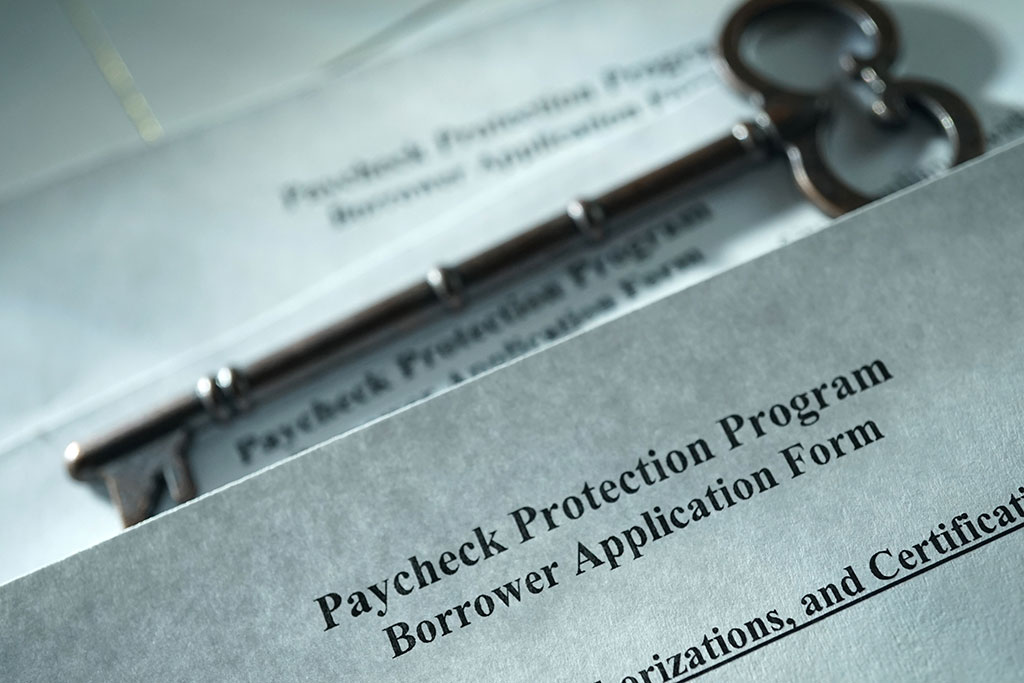
On May 18, 2020, Law360 featured an Article by AEL founding partner David M. Eskew in their Expert Analysis Section. The Article, entitled “Managing Paycheck Protection Program Loan Compliance” highlights potential headaches for business owners when applying for and using PPP loan funds. Follow this link to read the Article. AEL is currently counseling clients on issues related to the PPP, including its eligibility and use restrictions, and is helping clients to navigate the complicated rules and forms related to the critical aspect of PPP loan forgiveness.

Categories
blog

Difficult Compliance Issues Abound When Applying for a Paycheck Protection Program (PPP) Loan

As the owners of a small business, my partners and I have been following closely aid and stimulus packages passed by the Government.  The largest one, of course, is the “Paycheck Protection Program” or “PPP,” which is the centerpiece of the massive stimulus and aid package known as the CARES Act that was recently passed by Congress and signed into law by the President.  The PPP was designed as an amendment to Section 7(a) of the Small Business Act, 15 U.S.C. § 636(a), and seeks to serve as a lifeline to eligible businesses by providing a forgivable loan to pay for temporary payroll costs, employee benefits, rent, utilities, and mortgage interest. 

As the first wave of hundreds of billions of dollars under the PPP was exhausted in a matter of weeks, questions arose about who was eligible for the loans and the somewhat strict requirements under the statute to obtain loan forgiveness.  Additionally, amidst backlash over some of the early recipients of the loans, the Government promised routine audits for larger dollar amount loans, and federal prosecutors charged the first two individuals with fraud in connection with the PPP.  If the months and years following passage of the Troubled Asset Relief Program or TARP, the centerpiece of the last huge government stimulus, is any teacher, and recent warnings of Government officials are to be believed, fraud schemes involving the PPP and other CARES Act programs will be extensive and investigative and enforcement efforts by the government robust.  As a result, business owners can expect a fair amount of “Monday morning quarterbacking” by agency officials, especially for larger loan applications.  With that in mind, this post dissects the PPP provisions most likely to cause compliance headaches for business owners and summarizes the likely areas of focus of potential government enforcement action down the road.

What is At Stake?

On May 5, 2020, the U.S. Attorney’s Office for the District of Rhode Island announced the first criminal case related to PPP fraud.  In that case, two defendants – David Butziger and David Staveley – were charged in separate three-count criminal complaints with: in count one, conspiring to make false statements in order to obtain an SBA loan (15 U.S.C. § 645(a) and 18 U.S.C. § 371); and in count two, conspiring to commit bank fraud (18 U.S.C. §§ 1344, 1349).  Each of the defendants was also charged in a third count; Butziger with a substantive count of bank fraud (18 U.S.C. § 1344) and Staveley with aggravated identity theft (18 U.S.C. § 1028A).  The Government alleged in the affidavits filed in support of the criminal complaints that defendants falsified forgivable loan application documents and necessary tax forms to claim hundreds of thousands of dollars under the PPP for payroll expenses for 73 employees of 4 different businesses.  See Affidavit, dated May 4, 2020.  But, according to the affidavits, the businesses were not going concerns and the employees were fake.  One of the businesses had not been open since 2018 and was in disrepair.  Another closed in March 2020.  A third business was owned by someone else entirely, and the fourth business had never filed any tax documents and the purported employees did not work there.  It is, perhaps, the brazen nature of the fraud scheme – fake businesses, fake forms, and fake employees – that explains the dizzyingly swift government enforcement action.  Indeed, similar prosecutions under the Troubled Asset Relief Program, or TARP, following the last huge government stimulus package, took years to ferment. 

But, one does not need to fabricate businesses and lie about employees to potentially run afoul of the eligibility and use rules under the PPP.  As summarized in more detail below, the PPP has specific rules about which businesses qualify for assistance, how to calculate the loan amount, restrictions on how the funds may be used, and how the funds need to be used in order for the loans to qualify for full forgiveness.  Moreover, the loan application and attendant rules regarding the PPP require a substantial “good faith certification” that relates to both eligibility and use of the funds.  The certification language carries, as it almost always does, warnings of potential criminal penalties.  As stated in the Interim Final Rule 1, effective April 15, 2020, the SBA may direct the repayment of any PPP funds “[i]f you use PPP funds for unauthorized purposes[.]”  85 Fed. Reg. 73, at 20814 (April 15, 2020), available here.  The Interim Final Rule further warns, “[i]f you knowingly use the funds for unauthorized purposes, you will be subject to additional liability such as charges for fraud.”  Id.  So, with the specter of disgorgement and criminal and civil penalties, what are the most likely areas of compliance headaches for those who have applied for, received, or are thinking of applying for PPP loans?

Can I Make the Good Faith Certification Regarding Loan Necessity?

Whenever and wherever money can be obtained on the basis of a signed and certified form, you can be sure fraud prosecutions will follow.  This is especially true when the standard to which the applicant is certifying is somewhat vague.  The PPP includes a substantial certification regarding aspects of eligibility for and use of the PPP funds.  The most concerning of the bunch is the “necessity” certification, in which “an authorized representative of the applicant must certify in good faith . . . [that c]urrent economic uncertainty makes this loan request necessary to support the ongoing operations of the applicant.”  Interim Final Rule 1, 85 Fed. Reg. 73, at 20814 (April 15, 2020), available here; see generally 15 U.S.C. § 636(a)(36)(G)(i)(I).  Neither the words “uncertainty” nor “necessary” are defined terms, which begs the question, what is enough uncertainty to make the loan necessary? 

Early disbursements under the PPP, which contributed to the first 300+ billion dollars of PPP funds being exhausted in a matter of weeks, created even more uncertainty.  Indeed, as was recently reported in the Washington Post, “[n]early 300 public companies have reported receiving money from the [PPP],” including “43 companies with more than 500 workers, the maximum typically allowed by the program.”  Many of the recipients also did not immediately appear to be in any desperate need for the funds; as reported by the Washington Post, “[s]everal . . . recipients were prosperous enough to pay executives $2 million or more.”  In total, more than $1 billion was paid out to publicly-traded companies while approximately 80% of applicants did not receive any money. Outrage over the disbursements prompted many of these larger companies to return some of the funds.  In the cognitive dissonance that has become a hallmark of Washington politics, the Treasury Department hailed the program as a success and at the same time issued stern warnings regarding forthcoming audits.  Treasury Secretary Steve Mnuchin stated, “[t]his was a program designed for small businesses. It was not a program that was designed for public companies that had liquidity.”  Mnuchin promised audits by the SBA for any loan over $2 million, and warned of potential criminal liability.  The Treasury Department also created and then extended a deadline to return funds to May 14, 2020.  Interim Final Rule, dated May 8, 2020.   

In an apparent attempt to clarify questions around the “necessity” requirement, the Treasury Department posed and answered the following “Frequently Asked Questions” (FAQ) in an FAQ document it is periodically updating: “[d]o businesses owned by large companies with adequate sources of liquidity to support the business’s ongoing operations qualify for a PPP loan?”  Though a simple “no” might have actually clarified the issue, the Government opted to dance around the margins of the answer, offering some guidance, but little clarity.  The answer stated, “all borrowers must assess their economic need for a PPP loan under the standard established by the CARES Act and the PPP regulations at the time of the loan application.”  Hardly enlightening.  The answer goes on to state that, while borrowers need not show that they are unable to obtain any financing elsewhere, “borrowers still must certify in good faith that their PPP loan request is necessary . . . taking into account their current business activity and their ability to access other sources of liquidity sufficient to support their ongoing operations in a manner that is not significantly detrimental to the business.”  In what may be the only piece of actual guidance in the answer, the document states “it is unlikely that a public company with substantial market value and access to capital markets will be able to make the required certification in good faith, and such a company should be prepared to demonstrate to SBA, upon request, the basis for its certification.”  So, big profitable companies probably don’t qualify, but maybe they do.  Not a revelation, and not particularly helpful to the smaller, nonpublic companies that must also make the necessity certification.

Importantly, applicants should not assume that if they apply and receive the money, all is well.  Indeed, it is a common experience in other contexts that the borrower answers questions honestly and is told by the lender whether they are eligible for a loan and in what amount.  For instance, when taking a home equity loan, borrowers submit the necessary documentation and the bank, after a review, appraisal and underwriting process, tells the borrower what amount can be lent.  But, with the PPP, the language of the certification and the rules make clear that the onus of compliance is squarely on the borrower.  It is the borrower who must make the “good faith” certification that the loan is needed, and lenders may rely on the borrower’s representation.  As stated in Interim Final Rule 1:

SBA will allow lenders to rely on certifications of the borrower in order to determine eligibility of the borrower and use of loan proceeds and to rely on specified documents provided by the borrower to determine qualifying loan amount and eligibility for loan forgiveness. Lenders must comply with the applicable lender obligations set forth in this interim final rule, but will be held harmless for borrowers’ failure to comply with program criteria; remedies for borrower violations or fraud are separately addressed in this interim final rule.

85 Fed. Reg. 73, at 20812.

Just today, on May 13, 2020, the Treasury Department once again updated their FAQ document in an apparent effort to provide some comfort to applicants on the issue of the necessity certification.  Question # 46 asks, “[h]ow will SBA review borrowers’ required good-faith certification concerning the necessity of their loan request?”  The answer has two main parts: one for loans under $2 million and one for loans over $2 million.  First, Treasury today announced a “safe harbor” for loan amounts under $2 million, stating “[a]ny borrower that . . . received PPP loans with an original principal amount of less than $2 million will be deemed to have made the required certification concerning the necessity of the loan request in good faith.”  In other words, if your loan amount is less than $2 million, you will be deemed to have made necessity certification in good faith. 

Second, for loans over $2 million, Treasury provided a bit of cold comfort.  While the Government did not clarify what necessity means for these larger loans (other than to reiterate that eligibility determinations should be “based on . . . individual circumstances in light of the language of the certification and SBA guidance”), the Government did state as follows:

If SBA determines . . . that a borrower lacked an adequate basis for the required certification concerning the necessity of the loan request, SBA will seek repayment of the outstanding PPP loan balance and will inform the lender that the borrower is not eligible for loan forgiveness.  If the borrower repays the loan after receiving notification from SBA, SBA will not pursue administrative enforcement or referrals to other agencies based on its determination with respect to the certification concerning necessity of the loan request.

Based on this guidance, applicants for larger PPP loans still lack specific guidance on the appropriate circumstances justifying necessity, but are now assured that ineligible loans will be disgorged and that administrative enforcement and potential criminal referrals will not follow if the ineligible loans are returned after SBA notification.      In light of all this, what should businesses do in assessing their own need for a PPP loan?  As the above discussion indicates, it is not entirely clear.  But two concepts do emerge from Treasury’s guidance: current business activity and access to other sources of liquidity.  First, if you are going to apply for a PPP loan, be sure that you can document, if asked, negative impacts to your business activities caused by COVID-19.  Was there a sudden downturn in business precipitated by the health crisis?  For most small to medium-sized businesses – the local coffee shop, restaurants, construction companies, franchisees, fitness gyms, retailers – the answer will be an easy yes and the financial documentation readily available to show it.  The financials need not be so bleak as to present an existential threat to the business.  However, there should be sufficient enough dislocation to suggest that a loan is needed to effectuate its own stated goals, that is, to maintain current payroll levels and to support the business’s ongoing operations.  Second, be sure that your business does not have an alternative source of liquidity.  In an effort to discourage public companies from applying for the loan, the Treasury guidance specifically referenced market value and access to capital markets as two examples of alternative sources of liquidity, but one could imagine that it might also be hard to make the necessity certification if your business had available to it, before onset of the health crisis, a large line of credit.

How Much Money Am I Eligible to Take?

Beyond the obvious certification issues, there are also compliance questions around the amount of the loans.  The PPP statute sets out calculations to be used in determining the amount of the loan that is based upon aggregate payroll data from either the prior 12 months or the calendar year 2019.  Newer businesses may use the average monthly payroll costs for the period January 1, 2020 through February 29, 2020.  There is a $100,000 salary cap for payroll calculations, and borrowers have to provide backup for their payroll claims, including tax forms from the prior tax year.  Businesses are generally eligible to obtain 2.5 times the amount of their monthly eligible payroll, up to $10 million.  Once again, the PPP largely places the onus of compliance on the borrower.  As stated in question #1 of the Treasury FAQs, “[p]roviding an accurate calculation of payroll costs is the responsibility of the borrower, and the borrower attests to the accuracy of those calculations on the Borrower Application Form.”  Again, “lenders may rely on borrower representations, including with respect to amounts required to be excluded from payroll costs.”  The recent enforcement action in Rhode Island indicates that the Government is prepared to swiftly look behind a business’s claims about number of employees and purported tax filings.  Thus, while the specificity of the loan calculation formulas avoids the risk of uncertainty in how to calculate the loan amount, it does raise the need for careful documentation to support payroll claims.  And, perhaps this should go without saying, but if you are reluctant to submit your company to a full audit by federal regulators, consider whether it is appropriate for you to apply for the loan at all.

How Do I Use the Funds in a Way that Ensures My Loan Will be Forgiven?     

Perhaps the most attractive feature of the PPP is that, if used in accordance with the statutory requirements, the loans will be fully forgiven.  But, the loan forgiveness provisions have strict rules regarding how the loan must be used in order to be eligible for forgiveness, and mechanisms that may reduce the amount of loan forgiveness depending on the actions of the borrower during the 8-week period following origination of the loan.  Moreover, the statute provides that “[n]o eligible recipient shall receive forgiveness . . . without submitting to the lender that is servicing the covered loan the documentation required under subsection (e)” of the statute.  See Pub. Law 116-136, § 1106(f).  Thus, if borrowers hope to have their loans forgiven, compliance with the use restrictions is a must and good record-keeping and documentation an absolute necessity. 

First, PPP loans will be forgiven “in an amount equal to the sum of” the following four business expenses for the 8-week period beginning on the date of loan origination: (1) payroll costs; (2) payment of interest on any covered mortgage obligation; (3) payment on any covered rent obligation; and (4) covered utility payments.  See Pub. Law 116-136, §§ 1106(a)(3) and (b)(1)-(4).  It is, therefore, imperative for businesses to use their loans only for these four approved uses, and to document such uses carefully. 

Second, not all costs were created equal under the PPP.  Interim Rule 1 set out limits on non-payroll costs that can be forgiven.  Specifically, the rule states, “not more than 25 percent of the loan forgiveness amount may be attributable to non-payroll costs.”  85 Fed. Reg. 73, at 20813.  As explained in the Interim Rule:

While the Act provides that borrowers are eligible for forgiveness in an amount equal to the sum of payroll costs and any payments of mortgage interest, rent, and utilities, the Administrator has determined that the non-payroll portion of the forgivable loan amount should be limited to effectuate the core purpose of the statute and ensure finite program resources are devoted primarily to payroll. The Administrator has determined in consultation with the Secretary that 75 percent is an appropriate percentage in light of the Act’s overarching focus on keeping workers paid and employed.          

85 Fed. Reg. 73, at 20813-14.

Given these restrictions, loan recipients will also have to carefully calibrate how the loan funds are disbursed within their business in order to ensure that the loans will be forgiven. Third, loan forgiveness is “based on the employer maintaining or quickly rehiring employees and maintaining salary levels.  Forgiveness will be reduced if full-time headcount declines, or if salaries and wages decrease.”  PPP Overview, available here.  More specifically, the statute sets out formulas that serve to reduce the amount of loan forgiveness if the number of employees on payroll during the 8-week period following loan origination decreases as compared to the average number of employees during the same period in 2019, see Pub. Law 116-136, § 1106(d)(2), or if salaries and wages decrease.  Seeid. at § 1106(d)(3).  Exemptions for such reductions apply if employees are re-hired during the period after the business received the loan.  Id. at § 1106(d)(5).  Accordingly, loan applicants should be keenly aware of the payroll claims they are making in connection with their application, and have a plan in place to bring payroll back up to the appropriate levels in order to avoid loan forgiveness reductions under the statute.

Final Thoughts

The PPP provides a much-needed lifeline to “small businesses” across the country that are currently suffering as a result of dislocation brought on by the COVID-19 crisis.  If businesses carefully comply with the eligibility and use requirements in the statute and attendant rules, the PPP could help thousands of businesses keep their doors open and their employees employed without taking on any additional long-term debt.  But, as with any large Government stimulus program, there are strings attached.  The statute contains detailed eligibility and use restrictions, a fulsome borrower certification, and the statute places the burden of truthfulness and accuracy firmly on the borrower.  Thus, non-compliance with the statute’s requirements can trigger penalties, including disgorgement, civil and criminal penalties, and loan forgiveness reductions.  As small business owners, our partners have studied the PPP closely and are ready to offer advice and guidance.  If you own or operate a business that has applied for, received loan funds, or are thinking of applying for a loan under the PPP, reach out to us for compliance counseling and guidance.

Categories
blog

Some Good News for Providers: The Impact of COVID-19 National State of Emergency on Investigations into “Retained Overpayments”

April 13, 2020

As we discussed in some of our past updates below, Attorney General Barr has directed the Department of Justice (DOJ) to prioritize the detection, investigation, and prosecution of illegal conduct related to the COVID-19 pandemic.  DOJ has already announced a number of enforcement actions related to COVID-19 fraud, including action against a company selling fake coronavirus “vaccine kits” on the internet, and all indications are that the federal government will continue to vigorously investigate and prosecute Coronavirus-related fraud.

Along with increased government-initiated actions, we also expect an increase in whistleblower, or “private attorney’s general” actions under the federal False Claims Act (FCA) as a result of COVID-19-related healthcare fraud and abuse.  While there has already been much written on increased “direct” FCA activity stemming from COVID-19 related fraud, precious little has been written on the potential for provider liability under the “reverse” false claims provisions of the FCA for failure to timely investigate, report, and return overpayments to the government during the current state of emergency. In this post, we briefly explore the concept of “reverse” false claims in the healthcare context, and explain how the current “state of emergency” appears to automatically extend providers’ deadlines for investigating, reporting, and returning “retained overpayments.”

Reverse False Claims in the Healthcare Context

In typical “direct” FCA claims regarding healthcare services, a whistleblower alleges that a healthcare provider submitted claims to the government for services that were either: (i) not performed or (ii) were performed so deficiently, that payment should not have been made to the provider for the services.  “Reverse” false claims, or “retained overpayment claims,” however, are premised not on the submission of claims to the government, but rather, on providers’ allegedly retaining and failing to repay payments that were improperly made to them by the government.  The most common example in the healthcare context is when the government inadvertently or accidentally overpays the provider for healthcare services provided to covered patients and the provider does not return the overpayments to the government. Prior to 2009, the “reverse” false claims provisions of the FCA imposed liability on a person who “knowingly made, used, or caused to be made or used” a “false record or statement to conceal, avoid, or decrease an obligation to pay or transmit money or property to the [g]overnment.” Under this standard, claims could only be the subject of FCA claims if they were knowingly false at the time they were submitted to a government payor – which required that a party either falsify information during a reconciliation period or otherwise act knowingly and improperly to avoid a repayment and thus precluded liability under the FCA for unintentional “retained overpayments.” This significantly limited the ability of the government and whistleblowers to hold providers liable for “retained overpayments” under the FCA.

FERA Amendments to the FCA – the “60 Day Rule

So, in 2009, Congress passed the Fraud Enforcement and Recovery Act (“FERA”) which, inter alia, extended and broadened the scope of those provisions by creating the “60 Day Rule” under which overpayments can become “false claims” if not repaid within 60 days of “identification.” Under the 60 Day Rule, if such funds are not repaid within 60 days of “identification,” on the 61st day the failure to repay becomes a “false” claim” under the FCA.

Unfortunately, Congress did not define the term “identification” in FERA or the ACA, which left whistleblowers, the government, and providers uncertain as to when a potential overpayment would be considered “identified” for purposes of the FCA. Specifically, while the government and whistleblowers proposed that an overpayment was “identified” at the first indication there might be an overpayment, providers proffered that an overpayment could not be “identified” until it had been expressly verified with the exact amount of the overpayment determined.  This debate ultimately came to a head in U.S. ex rel. Kane v. Continuum Health System, an FCA case brought in the Southern District of New York in which the whistleblower claimed that the Continuum Health System (Continuum) failed to timely “identify” certain overpayments that had been accidentally made to Continuum as a result of a software glitch. In that case (in which, in full disclosure, your author was one of the attorneys representing Continuum), SDNY District Judge Ramos held, in denying Continuum’s Motion to Dismiss, that an overpayment is “identified” (so as to start the 60-day clock) when a provider is put “on notice” of a potential overpayment and that where there is an “established duty” to pay money to the government, FCA liability will attach even if the precise amount due has yet to be determined. In so holding, the Court held that Continuum’s alleged failure to act quickly enough to report and return overpayments could have fallen outside the “60-day” period, and thus, that the case could not be dismissed pre-discovery.

CMS Issues “Provider Friendly” Final Rule That Broadens Definition of “Identified” and Extends Time For Returning Overpayments in “Extraordinary Circumstances

A few months after the Court’s decision in the Continuum case, in February 2016, CMS issued a new final rule (42 C.F.R. § 401.305) that adopted a more provider-friendly interpretation of the term “identified.” In the Final Rule, CMS expressly disavowed the “all deliberate speed” benchmark that had previously been proposed for adoption, and instead established that providers must refund overpayments no more than 60 days after the amount of the overpayment is quantified if the entity acted with “reasonable diligence, which is demonstrated through the timely, good faith investigation of credible information which is at most 6 months from receipt of the credible information, except in extraordinary circumstances.”  If an entity does not act with “reasonable diligence,” however, overpayments must be returned within 60 days after the entity “learned” that an overpayment “may have” occurred.”

Critically for our current purposes, CMS’s comments to the Final Rule go on to state that “a total of 8 months (6 months for timely investigation and 2 months for reporting and returning) is a reasonable amount of time, absent extraordinary circumstances affecting the provider, supplier, or their community.”  Id. at 7662 (emphasis added). According to CMS, “[w]hat constitutes extraordinary circumstances is a fact specific question” but that it “may include . . . natural disasters or a state of emergency.”  Id.

Given this explicit language, savvy healthcare attorneys (like the partners of AEL, for example) will argue that the present circumstances – a global pandemic and a declared national state of emergency – constitutes “extraordinary circumstances” permitting providers additional time beyond the ordinary “8 month period” for investigating, reporting, and returning overpayments, without fear of “reverse” false claims act liability.  We think that a reasonable interpretation under the circumstances would be that the 8-month period was “tolled” as of March 13, 2020, the day “President” Trump announced the state of emergency, and that once that declaration is lifted, the period for investigating, reporting, and returning overpayments would resume.


So, fear not, healthcare provider friends — for while the potential liability for “reverse” false claims can be quite high, there is an argument that the time periods you have to investigate, report, and return overpayments appear, by the plain language of the applicable rule, to be extended during the current state of emergency.  Those ongoing internal investigations into overpayments can thus go on the “back burner” while you focus on the more pressing matters of coronavirus response and direct patient care, and can come back to the fore once the current state of national emergency is lifted (at which point, if you need the assistance of expert outside counsel experienced in internal overpayment investigations and disclosures, AEL will be happy to assist!).